Log in


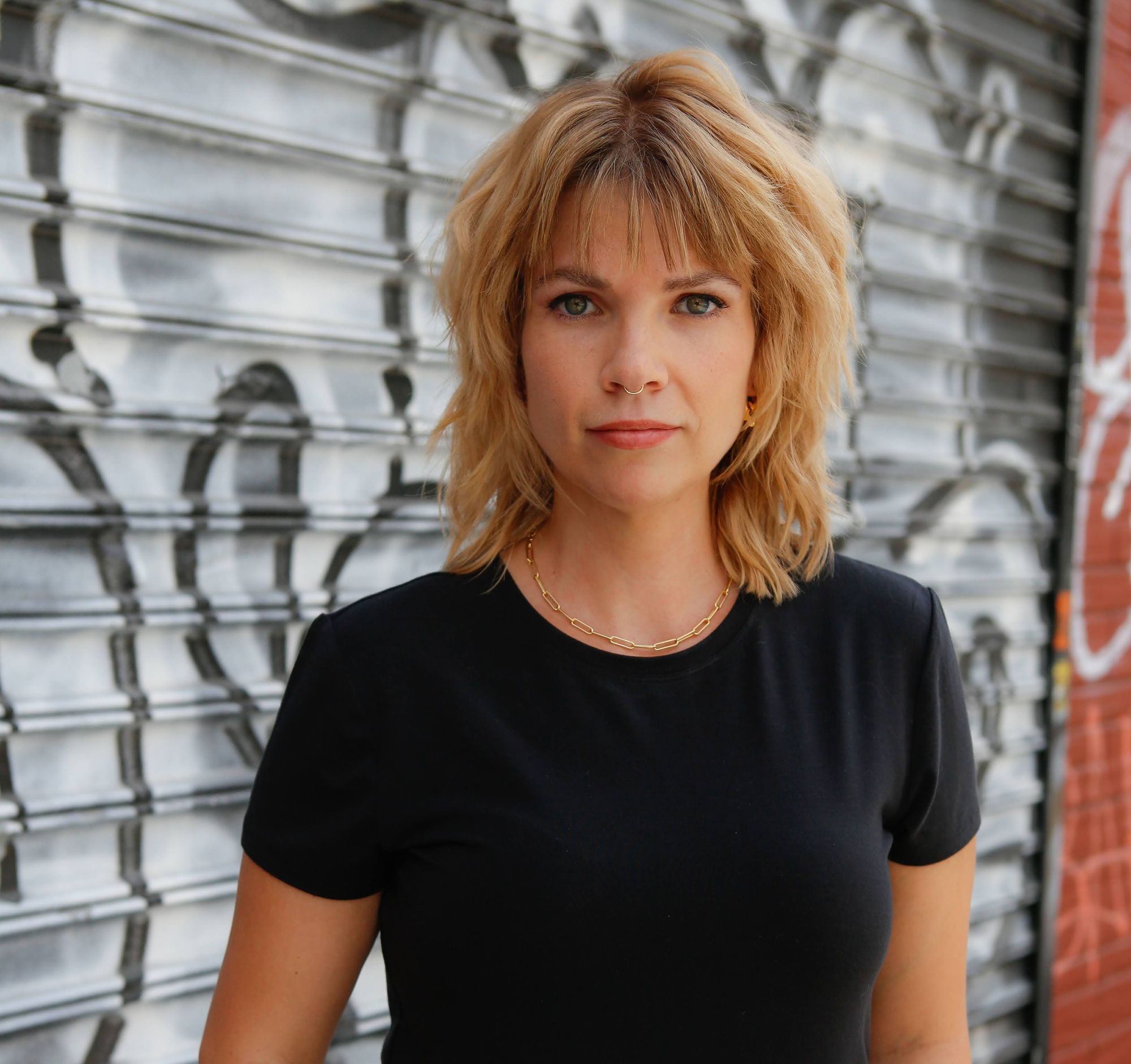
A decade ago, I made a decision about my daughter’s education that I hoped would challenge New York City’s separate and unequal school system. Now 16, she thinks I made the wrong choice.
Najya Hannah-Jones, 16, the writer’s daughter.Credit...Wayne Lawrence for The New York Times
I could feel her looking at me. Her body slung in adolescent impertinence against the front passenger seat door, shoulders turned so she could face me fully. Usually when I picked up my daughter, Najya, from middle school, she’d tumble into the car and bombard me with the day’s escapades, chattering nonstop about her friend group or complaints about an annoying teacher or her wonder at the test she’d aced despite thinking she’d failed it. But not this day.
“Did you know my school was bad like this when you decided to put me here?” she asked.
My hands tightened on the steering wheel as I worked to keep my face neutral, buying a few moments to gather my thoughts.
As they neared the end of her seventh-grade year, Najya and her closest girlfriends were thinking about their futures. Honors students, they searched the nation’s top colleges, and that led to a curiosity about New York City’s highest ranked public high schools.
Wondering about their chances of getting in, they decided to Google their own school and its ratings. And in doing so, Najya and her tight trio of Black girl nerds confronted not only the reality of the city’s deeply segregated educational landscape but also that the Brooklyn school they all attended existed firmly on the wrong side of the divide.
By dismissal time, Najya’s shock had turned to boiling, and the seatbelt had barely clicked before she was confronting me.
I had braced myself for this moment, spent nearly a decade expecting it, preparing for it. When Najya was entering pre-K, my husband, Faraji, and I decided to send her to the type of school that wealthier families with choices uniformly avoid — one that is low-income and mostly Black. Our decision had been informed by values shaped by my years of reporting on the enduring and too often seemingly hopeless battle for school integration.
I’ve lost count of how many times I have written some version of this sentence: Nationally, a Black student is less likely to have teachers who are qualified and experienced, and to be offered rigorous and college-prep curriculum, to have up-to-date technology and attend school in modernized facilities.
In New York, a combination of housing segregation and “academic” sorting, called school choice, that begins as early as pre-K means most Black students — even middle-class ones — are forced to attend racially segregated schools with high rates of poverty. And nationally, schools in predominantly nonwhite districts receive $23 billion less in annual funding than their heavily white counterparts, according to a 2019 analysis by EdBuild. In everything that we measure, these schools have less, even though the economically struggling student bodies they serve need more. And so the test scores and poor academic performance that typify these schools reflect not just the disadvantage of the students but, more essentially, the disadvantage of the schools.
New York City is a diverse school system — there is no racial majority among its student body — and yet Black children remain the most segregated of all student groups. As the U.C.L.A. Civil Rights Project describes it, New York “is a four-race city where white and Asian students, on average, attend middle-class, predominantly white and Asian schools and Black and Latino students are increasingly going to school with each other in schools where poverty is the norm.”
My husband and I had largely avoided segregated schools like these. He and his siblings attended integrated schools that served the military bases where their family lived. Starting when I was in second grade, my parents enrolled me in a school-integration busing program that allowed a limited number of Black students to leave their segregated neighborhood schools for white ones on the other side of town.
Being given access to the most resourced public schools in my hometown allowed me to flourish academically, and I am convinced that the integrated education my husband and I received set the foundation that has allowed us to become the successful upper-middle-class family that my daughter was born into.
We are both beneficiaries of educational opportunities that were forced into existence by generations of Black parents willing to put their most personal stake — their own children — in the fight for school equality for all Black children.
Black parents put their children forth as plaintiffs in lawsuits argued by the NAACP Legal Defense and Educational Fund that ultimately ended legal segregation in the Supreme Court’s 1954 Brown v. Board of Education decision. When the federal government refused to enforce the new law of the land, Black parents sent their children to wade through white mobs to enter white-only schools, pushing their doors open for the rest of us.
And yet decades later, integration now exists for a minority of Black children — usually those born to families like ours who have the money to pay for private schools or live in tonier ZIP codes zoned to heavily white public schools, or who can pay for tutoring that allows their children, from a very young age, to test into programs for “gifted” students. Most Black students, however, languish in the type of schools that the law was supposed to have eradicated.
So, like the generations of Black parents who came before us, Faraji and I felt an obligation to make educational decisions based on the collective good and not just our individual advantage. New York is considered one of this nation’s most liberal cities, while operating a school system that is among the most racially segregated. This segregation exists because policymakers and affluent parents — even those who profess a belief in integration and equality — shed their advocacy at the schoolhouse door and refuse to take or support any substantial action to integrate the city’s schools. Faraji and I decided that our role in this struggle meant upending the status quo and sending our child not to a wealthy white school but to a poor Black one.
Image
That may appear paradoxical, but only if we forget that the battle for school integration wasn’t catalyzed by the desire to put Black students next to white students but by an effort to ensure that Black children received access to equal educational resources.
We thought by sending Najya to a mostly low-income and Black school, we could help improve it for all the children there. From my past reporting, I knew that P.T.A.s at poor schools often can raise only a few thousand dollars, but Faraji and I could write checks that exceeded the annual P.T.A. budget. I witnessed how dismissive school officials could be to lower-income parents who lodged complaints or made demands for resources and how deferential they were to wealthy ones. I believed Faraji and I could bring some of that power with us. We had connections and time and status that should not matter, but that we all know do. And more than that, we believed strongly that if families like ours went into schools like this one, it would challenge other families with similar values to do the same.
After much internal debate in our household, in 2015, we enrolled Najya in pre-K at Public School 307, a segregated, high-poverty school across from the Farragut housing projects in Brooklyn.
I hadn’t intended at first to write about our decision. But a few months into the academic year, P.S. 307 became embroiled in an integration battle when parents protested the reassignment of their children from a wealthy and predominantly white school to ours. It felt impossible for me not to weigh in.
In 2016, I wrote an essay in this magazine called “Choosing a School for My Daughter in a Segregated City,” about our experience in a system in which educational inequality was widely accepted. Our daughter, then a kindergartner with Afro puffs, a plaid school uniform and Jordan-clad feet, appeared on the cover.
Image
The piece struck a chord in a way I could not have predicted. Readers flooded my inbox and posted hundreds of comments. Producers invited me for interviews, book publishers came calling and I was asked to speak all over the country by communities and institutions grappling with the issue of school segregation. The essay spurred community meetings in places near and far; and in New York City, it helped ignite parent and student activism around a subject that had largely disappeared from public discourse. Even a decade later, parents still share with me how my essay led them to make similar educational decisions for their children.
In the outside world, my choice had earned me valor. And yet that day, under the withering glare of my daughter, the words that I was formulating sounded hollow to my ears even before they passed my lips.
“Your school is not bad,” I told her, modulating my voice. “What are you talking about?”
Najya grew agitated. “You know what I am talking about. We looked up our school! We saw the test scores. We saw the ratings.” She ticked off the school’s below-state average reading and math scores, and that it ranked poorly on a popular school-rating website. I said I was aware of her school’s academic rankings, but that test scores alone do not define a school.
Glancing between her and the road, I told her everything that I had said a hundred times on stages, in interviews, in discussions since I had made her a symbol of how the choices we make can help sustain — or dismantle — educational inequality. I talked about the deep inequality in New York’s schools and how, like those Black families who came before us, we had an obligation to be part of the struggle of our larger community. Even if her schools were not academically the strongest, I explained, her father and I knew that we could provide for her tutoring and any other assistance to make up for what her school may have lacked.
Sign Up for The Great Read On weekdays and Sundays, we recommend one piece of exceptional writing from The Times — a narrative or essay that takes you someplace you might not expect to go.
But my child just shook her head, her face a mask of disbelief, and something else: betrayal.
“So you had money to send me to one of the best schools, and you chose not to?” she said, hurling her words. “Because other kids are disadvantaged, you didn’t want to put me in a great school?”
Najya was asking what I’d accomplished by not choosing the “best” school for her. And the honest answer is, I don’t know. When it comes to the choices my husband and I have made about public education, these days I feel that I failed both my values and my child.
I did not, when we chose P.S. 307, go into this with naïveté. I understood exactly what we would face, could cite studies and statistics by heart. But when I wrote my essay, we were in the propitious years, with Najya just a kindergartner with two caring and astute co-teachers.
The district had placed one of its new universal pre-K programs at Najya’s school, and it had attracted other well-off families who enrolled their children the year we did, and many had stayed for kindergarten. Najya adored school and seemed to be reading and doing math on grade level. She was also developing a strong sense of herself as a Black girl in a classroom that, unlike the rest of the school, was multicultural and economically diverse, a reflection of the city and the world. At the start of each year, the students created self-portraits, and I chuckled with my husband when our light-skinned child chose to draw herself with the chestnut-colored crayon and not the beige one because that is how she saw herself.
But this did not, I suppose could not, last. The dynamic, exceptional principal who headed the school when we enrolled Najya into pre-K, a woman who had herself grown up in the public housing across the street and had turned this high-poverty school into a vibrant learning community, retired at the end of the year. It was soon clear that the new principal was not up to the task of sustaining the work of the veteran educator she had replaced.
Toward the end of first grade, Najya started sometimes saying she didn’t like her school and complaining how chaotic it was at lunch. I decided to visit during the lunch period and was shocked by what I saw. Najya’s class and another class were sitting at their tables in the cafeteria with no lunch and no adult supervision. Children were running wild, chasing, hitting and pushing each other while the teacher’s aides and cafeteria workers stood by looking bored.
Several times, I had to instruct children to stop striking each other and to sit down, at one point physically pulling two boys apart. When I asked one of the aides why the children weren’t being supervised, she told me the lunch period was short-staffed. After I sat back down with Najya, she told me, “It’s always like this, and that’s why I don’t want to go to this school.”
It was not the children that horrified me — kids of all incomes are rambunctious at lunchtime. It was the callous disregard of the adults. Students respond to the high or low expectations of institutions and the grown-ups who operate them, and it was clear that these children were getting the message.
After lunch, I headed straight to the principal’s office to meet with her. Afterward, I sent a lengthy email about what I had witnessed and demanded the unsafe lunchroom conditions be addressed. In what had become a pattern when we raised concerns, it took several days before the principal responded and several more weeks of emails and calls before she announced a plan to address the lunchtime issues.
My husband and I were frustrated and worried but remained committed. By then, all but one of the white children and nearly all the middle-class children who had started pre-K with Najya had left P.S. 307. We felt we could not abandon the school and our convictions at the moment we experienced the dysfunction we knew defined so many of the segregated schools serving poor Black children. We had to stay and fight for the students who did not have options, and so we started to become a thorn in the principal’s side.
Image
While much is said about the chronic absenteeism of low-income students, there is often a parallel among staff members at these schools. Najya’s principal regularly wouldn’t engage with us or wasn’t in the building at all. In Najya’s third-grade year, her teacher missed a significant number of days, leading Najya to complain about the substitute teachers who rarely taught and how sometimes there was no substitute at all. On those days she and other students would be sent to the second-grade or sometimes the kindergarten class, where they would be made to work on their own, and I would have to once again call the principal only to wait for days for a response.
But fourth grade was the worst year. At the first parent-teacher conference in November 2019, Najya’s teachers told us that she was not performing on grade-level in any of her academic subjects and that her assessment given at the start of the school year had shown she was not a proficient reader. We were perplexed. Najya was always a good student, and her past reading assessments were always at or above grade level.
When we got home that night, I emailed her teachers and copied the principal. We needed to understand why our daughter was suddenly floundering. I told them that we wanted to see Najya’s reading assessment and all her graded classroom work so we could determine what she didn’t understand and get her tutoring. I was trying to signal that we were active and involved parents, that we wanted to be partners with them in our daughter’s success.
Neither of Najya’s teachers nor the principal bothered to respond. What followed was a series of emails and phone calls and meetings trying to get basic items — copies of Najya’s graded work, her reading assessment, her test results — and receiving nothing.
Then one day in December, Najya came home and excitedly informed me that she had suddenly jumped three grade levels in reading in one month. Knowing that this was virtually impossible, I reached out to the school’s literacy coach and learned that after we began asking for the reading assessment, Najya’s teacher had instructed the coach to perform the evaluation and that she found Najya was reading just fine. What became clear to me was that Najya’s teacher had most likely never performed the school’s mandatory reading assessments for Najya or any of her classmates but instead had assumed the flagging competency of these mostly low-income Black children.
Finally, a few days before school let out for winter break, I received a folder in Najya’s backpack with the math assignments I had been requesting since our conference. Once I tucked her into bed, I sat at my dining room table and scanned one page, then another and another. None of them were graded. I started checking Najya’s work and discovered most of her answers were wrong. Najya believed herself to be good at math — it was her favorite subject. But now I understood she thought she was correctly solving all her problems because her teacher was not checking her work. Similarly, Najya’s writing assignments were rife with uncorrected punctuation, capitalization and grammar errors.
I sat there silently for several minutes, conjuring the image of my little girl thinking she was soaring in class when she was failing, and my devastation morphed into hot rage.
The day school reopened, Faraji and I went to the principal’s office and sat there until she found time to meet with us. That’s when the principal finally began to take us seriously and, some days later, mandated a system for assessing students and communicating with parents. By then, we had already started private tutoring for Najya, and we also got the superintendent of our district involved. He promised remediation for the entire class, including adding an additional teacher for daily small-group instruction. Still, with half the academic year over, it all felt like too little, too late.
Image
There was nothing exceptional about what I witnessed at P.S. 307. I had observed and reported on similar educational malfeasance in Detroit, in Durham, in St. Louis, in Tuscaloosa, in Birmingham. But I was no longer a mere observer of this system wreaking havoc on other people’s children. Now I was experiencing it with my own.
And then Najya came home despondent one day in February. She told us that her teachers had stopped calling on her. She’d become so frustrated that, waving her hand furiously, she began to blurt out the answers. But that got her in trouble. Wrapping Najya in my arms, I reassured her she was bright and doing nothing wrong. “We will address it,” we told her, projecting confidence. But that night, after I tucked Najya into bed, I sat across from Faraji in our living room and broke down in sobs. Should we consider leaving the school? In truth, we felt utterly stuck. Our child was suffering, but all these children were — they were languishing in classrooms with educators who did not take their academic potential seriously and largely refused to teach.
What would happen to those children if we abandoned them as everyone else with power had?
I knew the consequences of this educational neglect would follow them throughout their lives, as the failures here would be passed on to the next grade and the next. And then our society would blame their academic limitations on the dysfunctional culture and poor choices of their marginalized families, because blaming poor families is more convenient than calling for the dismantling of segregation.
But our experience at P.S. 307 exposed the fallacy that caring families are more important than competent teachers. Here we were, this upper-middle-class, educated, highly involved family with a house brimming with books. Najya’s principal and her teachers knew that I worked for The New York Times reporting on school inequality and that Faraji served on the P.T.A. and the school leadership team. And yet with all the power and resources at our disposal, we left Najya’s elementary school at the end of fifth grade feeling wholly defeated by a system of inequality that may begin outside the school walls but is magnified within them.
Even though our elementary school experience left us battered and chastened, we remained determined to send Najya to a neighborhood middle school that enrolled all students who wanted to attend. But this time we needed to find a school that would also nurture Najya academically and emotionally. Under the city’s so-called school-choice system, most of the highest-performing public middle (and high) schools use what are called academic screens — a combination of grades, interviews, portfolios and standardized tests that determines admission — to allot access to public schools that most public-school children can’t get into.
This systemic sorting of worthy and unworthy children is justified by saying that our “brightest” students deserve and demand more rigor. While many of the city’s Asian students have benefited from these screens, in reality the screens are part of a tawdry bargain to keep a dwindling number of white and wealthier parents from exiting the public school system.
We ultimately chose the Urban Assembly Unison School, which is part of a cohort of themed public schools created to advance the economic and social mobility of low-income students and students of color through rigorous instruction and a focus on social-emotional learning.
Unison is headed by a gifted and compassionate principal named Emily Paige. A masterful fund-raiser and school advocate, she ensured that the opportunities available to her students mirrored those at wealthier schools. The school has a hydroponics lab, and Najya became a member of its food-justice club. The students took overnight field trips to Philadelphia and Washington and saw “Hamilton” on Broadway. There were Black History Month assemblies and spirit weeks. And we were happy to pitch in wherever we could, helping to cover field-trip costs, or purchase sports uniforms, or clear teachers’ GoFundMe lists.
To our relief, Najya appeared to be thriving academically. She earned A’s with some B’s and was placed in honors math and science. The teachers readily communicated with parents, and I could go online daily to view her grades and test scores.
But before long Najya started coming home with familiar complaints. Just like at her elementary school, her teachers did not assign homework, and that troubled her, and us. She’d bemoan how the less experienced teachers struggled to manage their classrooms and would expend so much attention on the small number of kids acting out that they’d be unable to complete their lessons or help a student stuck on a problem. There were occasionally fights in the hallway.
Unlike at Najya’s elementary school, Paige always responded immediately when we raised a concern and did her best to address it. But she was trying to perform an impossible balancing act thrust upon educators at schools with extreme proportions of students living in poverty, which often also serve a disproportionate number of students diagnosed with learning disabilities. Schools like hers tend to rely on a zero-tolerance disciplinary playbook and often simply remove misbehaving students from classrooms, depriving them of precious educational time they cannot afford to miss. But at Unison, teachers constantly worked to refocus students and mitigate conflict. This is good educational practice, but kids like Najya, who were just trying to do their work, saw this treatment as deeply unfair.
We decided to set up a meeting with Paige so Najya could express her concerns. She told Paige that her teachers often rewarded, in her words, the “problem” students for doing the littlest things right; meanwhile, the students who always did what they were supposed to went unrecognized.
Paige sat across from us, listening intently. When Najya finished, her principal apologized to her and promised she would work on it.
A few weeks later Unison held a schoolwide honor-roll breakfast and award ceremony in the school cafeteria. During the event, Paige credited Najya’s advocacy for this new tradition. As I watched parents proudly snapping photos of their children holding honor-roll certificates, and Najya giggling with her girlfriends over eggs and pancakes, it felt right: This was why we were here.
Image
By the second half of Najya’s seventh-grade year, she announced that she and some of her friends had decided to enroll in an after-school tutoring program for top students at Unison to help them prepare for the exam for the city’s eight prestigious specialized high schools. Because these public schools admit students based on a single entrance test, Faraji and I have long opposed them, and as a result we had not once discussed them with Najya. But when she told me she had signed up, I thought about her trying to push herself academically and couldn’t see how I could discourage her from doing so.
By then we’d had the confrontation in the car, but Najya knew she was a top student and still believed she was capable of getting into one of the test-in schools. In researching which specialized high schools they might want to attend if they scored high enough, however, she and her friends discovered the many news articles about how few Black or Latino students gain admission to these schools. (Although a majority of New York City public-school students are Black and Latino, this year they make up just 10 percent of the students who scored high enough on the exam to attend a specialized high school; only three Black students in the nation’s largest school district were admitted to Stuyvesant, the most prestigious of these schools.) Confronted with this reality, her friends had decided the tutoring was a waste of time and decided to drop out. Najya wanted to drop out, too.
“Look at our school, Mom,” Najya told me with a resigned shrug. “We know we’re not going to get in.”
I thought of all the times I had witnessed students in segregated schools make similar calculations, including one whip-smart, funny ninth grader I followed for several months some years ago in Detroit named Aabiana. The day of the state tests, I met up with Aabiana after school to see how she felt she did. She just rolled her eyes and laughed, telling me she had randomly filled in the bubbles. The test for her was a setup. In 10 years of public education, she had never attended a school that had not been labeled failing by the state. She’d gone her entire freshman year without a math teacher but now was being tested to prove that her math acumen was on par with other ninth graders.
Aabiana refused to participate in a state test that did not take into account the substandard education that same state had allowed her to receive. She could not be labeled a failure if she did not try. It was hard to deny Aabiana’s logic. Somehow, she was expected to value an education for herself when it was clear no one else did.
As for Najya, because she’d signed up for the specialized high school exam, I made her take it. But she was right. Neither she, nor any of the other Black kids she knew at her school, scored high enough to get into any of those schools.
By the start of Najya’s eighth-grade year, she had lost the roundness of her baby face and had taken to wearing glamorous braids that cascaded down her back, and as with all middle schoolers, everything required debate — bedtimes, chores, dinner options and especially our choice of her middle school.
I explained our decision over and over, but my answers never satisfied her. “But what did it do?” she’d ask. “Putting me in this school didn’t change anything. I was not trying to be in this type of environment. It makes no sense.”
It was draining, but I respected her growing independence and admired the way she was advocating for herself. Yet it also unsettled me. Her adamance started to seed a fear that if I continued to force her to live my values, it could haunt our relationship far past her school-aged years. That concern led me to a wrenching decision. I waited until the next time she brought it up, and then I told her I was going to let her choose her own high school.
“Really?” Najya seemed incredulous, even suspicious maybe, peering at me from the corners of her eyes.
I laid out what it meant. I had made the choices for her education based on my values. She was old enough now to decide what her own values would be. I would give her absolute autonomy, with the exception that she had to choose a public school. She would research them, she would decide which ones she wanted us to visit and she would choose where she applied.
A few days later, Najya handed me a list. Her top schools were heavily white and screened their students, the type of public schools I had spent my career arguing against.
But the link between race and educational opportunity was clear to my child. “I’d never been in a school with white kids and don’t think I really wanted that,” Najya later admitted. “But I thought, If you are looking at the top schools, they’re majority white. So I kind of just, like, knew that’s what I had to do.”
We visited several, and in the end, Najya was admitted to her first choice, one of the city’s hardest public high schools to get into. She was proud of herself, and I was proud of her, too: She had done her research, set a goal and achieved it.
I knew her new school well. Located in a wealthy, gentrified neighborhood, it shares space in its building with three lower-income, predominantly Black high schools. By letting Najya make the decision, I was allowing my child to attend a school that was a beneficiary of the inequality that defined the city’s educational landscape.
How could I spare myself the judgment I had meted out to others when they justified why they — despite believing in integration — sent their own children to schools that entrenched segregation? Across the country, I’d lectured about how educational inequality is systemic, but that this fact did not absolve each of us of our individual choices. And in the end, I could not even sustain the cause within my own family.
Najya seemed, in her decision, to reject my every belief about public education and our family’s obligation to our community. But in entering the other side of public education in New York City, Najya would soon learn what I had long known: When it comes to the education of Black children in this country, there is nearly always going to be a struggle. It’s just a matter of which one.
Najya started ninth grade buzzing with freshman nerves, excitement and high hopes. But just two weeks later she came home distraught, asking if she could transfer to Banneker, a rigorous predominantly Black high school in Brooklyn.
She was experiencing culture shock. My daughter had never been part of a minority in a school, and now she sat in classrooms where some classmates casually tossed around racial slurs as if it were cool. In her Black schools, there was not a doubt among her peers that one could be Black and smart. But in this predominantly white and Asian school, some of her classmates now made comments that demeaned her or the other Black kids enrolled in the schools they shared the building with. Najya would call me during lunch upset because one of them had insinuated she wasn’t that intelligent or made a joke about her being “ghetto.”
I had tried to prepare Najya for this — this educational experience I knew intimately. While the majority-white schools I went to provided me the best public education my small town offered, they had often been socially isolating and rife with racial tension. Long before I started reporting on school segregation, I decided I would never want my child to experience being one of a small number of Black kids in a school. Yet this is exactly what she’d chosen for herself.
I listened to Najya pour out her distress, then told her sympathetically but firmly that she had made her decision, that life was never going to be easy and that successful people do not give up when things get hard. She’d have to stay.
But Najya’s cultural struggles were soon overtaken by academic ones. The first semester for Najya felt like drowning. She had homework for the first time, and she was suddenly inundated with pages of nightly reading for her classes. She did not know how to manage the crush of assignments, and the effort that used to earn her A’s no longer cut it. Najya had never been taught the skills of independent study, and suddenly the child whose identity had been the nerdy honors student was working harder than she ever had and barely keeping up.
Algebra, she thought, was the one exception — this was a subject she believed she knew. She had taken it in eighth grade but had to retake it because she hadn’t passed the statewide exam. At the time, I was somewhat concerned, but as Najya had earned A’s in the class I assumed she didn’t pass because, like many children, she has trouble sometimes on standardized tests. When she had to take the course again, I thought that the concepts would be familiar to her. One night early in the semester as we were eating dinner, Najya gushed about how easy the test had been. “I know I got an A, or at least a B,” she said smiling. A few days later, she came into the house, ran to her room without speaking, slammed the door and sunk to her floor, sobbing. She’d failed it.
This became an unbearable pattern. She’d come home glowing about an algebra exam because she “really knew the material this time” and my stomach would tie into knots. A few days later, I’d trail her upstairs to find her crumpled on her bed. “I studied so hard. I just feel so dumb.”
My child’s confidence wilted like an unwatered plant. She started to develop an almost debilitating anxiety around taking tests. She became sullen at school and began to act out. For the first time ever, I got messages from teachers about Najya’s behavior.
I enrolled Najya in algebra tutoring. After an assessment, the center’s director called me in and told me that Najya knew very little algebra and had huge gaps in many of the building blocks of math that she should have learned in elementary school, like mastery of long division and fractions. The intervention would need to be intense, but Najya was smart, she assured me, and with the proper support would catch up.
And she was right. That first year, we were in constant contact with Najya’s teachers. We explained to them the type of schools Najya had gone to and that she did not have the same academic preparation as her peers. Her humanities teacher took the lead, working with Najya’s other teachers to get her the academic help she needed. Her biology class was taught by two dynamic and compassionate Black women, who opened their classroom to her if she needed a break and helped her adapt culturally to the school.
Between that and the tutoring, Najya quickly found her emotional and academic footing. By the semester’s end, she was earning nearly all A’s and B’s. And at the end of the school year, she passed her state algebra exam.
Image
Having now experienced both sides of our segregated system, I wanted to talk to Najya’s middle school principal, Emily Paige. I wanted to understand how it could be that Najya had gotten A’s in algebra but knew hardly any of it, and how despite being an honors student at Unison, she wasn’t prepared for the rigors of her high school.
It’s easy to look at these things and indict Unison. But I also understood that a school like Unison is tasked with working miracles to overcome the years of educational morass they have inherited from schools like P.S. 307.
The way Najya was able to catch up and thrive in high school was possible because her teachers there were dealing with just a few students with educational gaps — not an entire classroom, not an entire school. Paige’s middle school, on the other hand, does not screen for students who are already highly academically successful; it enrolls all children who show up at its doors, regardless of what they know or don’t know. As we sat in Paige’s office in the final weeks of the school year, I asked her if I could play her a snippet of Najya describing her Unison experience.
Najya’s voice through my computer sounded matter of fact. She talked about how she and her friends felt the school was too easy and that they weren’t being challenged. “I complained to my friends,” she said: “‘We don’t get anything. We’re not getting any homework. We’re not getting anything.’” When asked if she had wanted homework, Najya responded: “We did. We did. We honestly did want to get more things. We knew that we weren’t learning enough. We didn’t know anything.”
As I stopped the recording, Paige sat still, tears welling in her eyes, her face beginning to flush.
Many educators land at a school like this because they cannot get hired at a “better” school. But I’ve met so many people like Paige who joined the profession precisely because they want to serve a place like Unison. Born to factory workers in upstate New York, Paige barely made it out of high school herself and understood the necessity of a system of education that doesn’t write off its children because they founder academically.
But the stark educational apartheid of New York City schools subverts, and sometimes perverts, the efforts of even the most dedicated educators.
“None of this surprises me,” Paige said, regaining her voice. “This is the reality of a segregated system, and it’s not just segregation by race and class, it’s by ability. This is the reality of school-choice systems.”
Most New York City public elementary students attend a school zoned to their neighborhood — children in wealthy white neighborhoods attend wealthy white schools, and poor Black children attend poor Black schools. But if affluent parents move to a gentrifying neighborhood, they can exercise “school choice” and send their children elsewhere. There are schools in neighborhoods like Harlem, Crown Heights and Bedford-Stuyvesant, where I live, where about a quarter of the kindergarten students zoned for those attend them, according to a 2018 report by the Center for New York City Affairs. By middle school and high school, a majority of students take part in the school-choice attendance system, but most kids cannot get into selective schools and instead find themselves in schools that have no enrollment criteria.
That leaves schools like Unison with few students from affluent families and a disproportionate number of students who are low income and diagnosed with learning disabilities. While more than one-third of Unison students have learning disabilities, 17 percent of students at Najya’s high school do.
Because they serve students who have been educationally neglected long before they arrive at their doors, schools like Unison are often faced with no good choices. Unison had eliminated homework because studies show that it does not have much impact on academic achievement, and that assigning it often sets up for failure students who are so academically behind that they cannot do the work on their own. Under the Unison system, students completed their assignments during class time where a teacher could guide and help if they got stuck. But for students like Najya, this practice proved absolutely harmful.
“Having a lot of homework, it’s almost like a proxy for ‘This is a good school.’” Paige said. “I remember Najya sitting here in my office and saying, ‘What about us?’ It feels, to me — the way that I understand when the kids are asking that is, ‘Will you honor my academic self?’ That’s what she’s asking. And I think in not giving homework, we didn’t honor their academic selves. And that’s where I could cry, because it’s just awful.”
She paused. I could see the pain of this admission etched in her face. “It is important to not, in our pursuit of being antiracist, lower expectations,” she told me. “Because this is what happens, right? It’s racism under the guise of antiracism.”
But the opposite approach also hadn’t worked. Even as Unison eliminated homework, it also adopted an initiative called “Algebra for All,” which Najya took part in. Algebra for eighth graders is considered a college gateway course. As a result, it’s mostly available at affluent and whiter schools, and nationally it has become another marker of inequality. The idea behind the initiative is that students should not be deprived of advanced academic opportunities because in the past they attended schools that did not properly educate them. Doing so just accumulates the disadvantage of these students.
But how do you successfully teach higher-level math to a classroom of middle-school students like Najya who have substantial gaps in the building blocks of mathematical knowledge? This would have proved a gargantuan task for even the most experienced educator. The chances of success for Najya and her classmates in math were further reduced by the fact they were taught each year not by a master teacher but by a novice, a common circumstance at high-poverty schools.
Najya had performed better than most of the students in her grade, but she was not performing on grade level, either. Because so many students arrived with educational deficiencies, the school focused more on growth than mastery and essentially graded students on a curve. Since then, Paige has made adjustments, including reinstating homework, but of course, these are mere patches that can’t address the systemic inequality that has robbed these students of educational opportunities their entire lives.
“It’s very, very hard,” Paige told me. “There’s no model out there for holding all of these truths, these complex truths, all at once. We are working within the system that we know is not working, while trying to recreate and reimagine a new system, while working with young people who have all this potential, who’ve not been given the opportunities for that potential to thrive and be unleashed. And they understand all of it, and they understand none of it, all at once.”
Image
One day in June as I was immersed in writing this essay, my phone rang. It was Najya. She’s now 16 and was finishing the final weeks of her sophomore year. She was making her daily call for lunch money, a ritual I created to force her to check in with me once during the school day.
“Hello, Babycakes!” I tried to sound cheery. I failed.
“What’s wrong, Mommy?” she asked immediately.
I’d been making my way through pages and pages of email exchanges with Najya’s principals and teachers, and this had jostled loose a truth I could no longer suppress. For years, I had been defending my decision to Najya, trying hard to balance empathy for her with the justification of her father’s and my choices. I wanted my child to see it my way, to see the struggles she was having as part of a lineage and a mandate, to understand the tremendous privilege that I believed inoculated her against the worst consequences of the dysfunction and at times educational malpractice that she and her classmates experienced.
But now I felt overcome with regret. Najya deserved better. They all did. But she was mine. This girl, my only child, looked to me to protect her, to give her what she needed to thrive. And I had not chosen her.
I almost cannot type the words. Because when I do, an image of her in her blue school uniform, her hair in beaded cornrows that clicked when she swung them, with her sweet, baby-toothed smile springs to mind, and the tears come.
On the phone, I knew if I tried to brush off Najya’s question, she would simply keep asking. She’s like me in that way: relentless. So I told her that I’d been reading through the old emails and that I was feeling really sad that she had gone through so much and that I had not listened more to her. “I feel like you got cheated,” I said. “And I’m sorry for that.”
For a moment, Najya said nothing. Then she told me, “Sometimes I wish instead of always thinking about other kids, you would have thought about me. I never really got the education I wanted.”
This is when I would have normally responded with something like “I did think of you, and I knew you’d be OK” or “You are doing just fine at your selective high school.” But not this time. I just said, simply, “I acknowledge to you that I didn’t do the best for you, and I am so sorry.”
The line grew silent again. Then, “I am kind of happy that you are seeing this.”
She then said she was glad she had not spent her early years in a white environment as many of the Black students at her high school had, because she’d developed a strong sense of her identity and had the confidence to speak up against the casual racism they sometimes experienced. Najya said that spending the last two years in classrooms full of privileged kids had taught her that these students weren’t smarter or even necessarily better behaved than the kids she had gone to school with before; they just had more.
My contrition, it seemed, had shifted something in my daughter. I realized what she’d been yearning for most was my acknowledgment that she had borne the cost not only of our unjust society but also of my ideals. In this, Najya had become part of a long, unwanted tradition in Black communities. One that it feels as if we will never be free of.
As I hung up the phone, my mind raced. The segregation we were battling in 2026 was supposed to have been banished by the sacrifices of Black children nearly seven decades ago, when their parents sent them to integrate their local schools to enforce the Supreme Court’s 1954 prohibition on school segregation after the government did not.
I kept thinking about one of those children, named Leona Tate, now in her 70s, whom I met a few months earlier.
In November 1960, a 6-year-old Tate, along with Tessie Prevost, Gail Etienne and, famously, Ruby Bridges, became the first Black children to desegregate white elementary schools in the Deep South.
We tell this as a triumphal story. One in which these Black children suffered, yes, but in the end, integration prevailed and America was transformed. But when Tate was sent to McDonogh 19 Elementary School, integration did not even last until the end of the day. By 3 p.m., all the white parents pulled their children out of school.
Her parents later sent her to desegregate another white elementary school. And then a white middle school, and then a white high school. Society benefited from their dismantling of Jim Crow, but Leona Tate and the other girls wore the scars of our “advancement.” They were threatened by white strangers, hit and spit upon by white classmates and emotionally abused by white teachers. They never got the education they deserved in hopes that future generations would. “It wasn’t easy for us,” Tate told me, “but we had to.”
I asked Tate if she felt resentment toward her parents, if she wished they had made another choice, doing what was best for her and not the country. “Noh-oh,” she said, her sweet New Orleans accent melting the word into two syllables. “I think it was a hard decision, a courageous decision, to put your children on the front line like that. And I probably would do the same thing. I’m glad I did what I did when I did it. Somebody had to do it.”
Maybe my own child would also come to appreciate what she experienced one day, or at least, why we did what we did.
But like Tate’s, my daughter’s sacrifice could not transform a system that those who hold the most power refuse to change. These days, the outcry and efforts my story helped provoke 10 years ago have mostly gone silent. Black children in New York’s schools, and this nation’s, are as segregated now as they were a decade ago, two decades ago, three. And in profound ways, we’ve actually moved backward, with a federal government that no longer gives even lip service to integration but instead is weaponized against it.
We desire to be let off the hook by these realities — that we tried and we failed; by the shamble of decades of halfhearted efforts; by how insoluble it is to achieve equality in a nation with our history. Instead of fortifying our determination to fight for integration, we have instead chosen to succumb to a collective apathy in the face of a system so devastatingly unequal that it puts at odds trying to be a good person with trying to be a good parent.
But for all of our justifications, including mine, an undeniable verity remains. As long as we continue to rescue our own children from the failing schools where we allow other people’s children to languish simply because those children have been born Black and poor in a nation of racism and riches, there is no absolution here. Not for me. Not for you. Not for any of us.
Nikole Hannah-Jones is a domestic correspondent for The New York Times Magazine covering racial injustice and civil rights.
Related Content
inEducation: Sociology
New York Times inEducation has been designed as a resource to connect Times journalism with key areas of study for students and faculty through our Education Subscription Program. If you are affiliated with a U.S. college, visit <a href="http://accessnyt.com" rel="nofollow">accessnyt.com</a> to learn if your institution provides New York Times access. Others should inquire with their school or local library. If you are a faculty or staff member interested in bringing The New York Times to your school, visit the Group Subscriptions Page.
Chang W. Lee/The New York Times

Kaiti Sullivan for The New York Times

Philip Cheung for The New York Times
More in Magazine


Eli Durst for The New York Times

Illustration by Tomi Um


Illustration by Tomi Um

Raymond Meeks for The New York Times
Editors’ Picks

Photo Illustration by The New York Times; Background: Brian Rea; Inset photo: Monica Schipper/Getty Images

David Grunfeld/The Times-Picayune, via The New Orleans Advocate, via Associated Press

Universal History Archive, via Getty Images
Trending in The Times

Michael B. Thomas for The New York Times

A24

Tina Fineberg for The New York Times

Louisa Gouliamaki/Reuters

Susana Vera/Reuters

Illustration by Kristie Bailey/The New York Times

Marta Monteiro

Mary Evans/Warner Brothers © 2004 Warner Independent Pictures Inc/Ronald Grant/Everett Collection


Sophie Bates/Associated Press
Advertisement
 reply
reply