Journalist/developer. Storytelling developer @ USA Today Network. Builder of @HomicideWatch. Sinophile for fun. Past: @frontlinepbs @WBUR, @NPR, @NewsHour.
2268 stories
·
45 followers

Elizabeth Holmes' fiance is the worst man in America

1 Share

NOTE: This review contains spoilers for “You Can See Everything.”

Sometimes the best journalists are people who don’t even purport to be journalists. The late Anthony Bourdain was one such accidental herald, as was “Borat” star Sacha Baron Cohen before the gonzo comedian became recognizably famous no matter his alter ego. Let’s go ahead and add writer/performer Nathan Fielder to the list. You and I know Fielder best from “Nathan For You” and “The Rehearsal.” Everyone else is about to know him for “You Can See Everything,” a tag team effort with documentarian Lance Oppenheim that is not only the best film of 2026 so far, but also one of the finest works of journalism I’ve ever seen.

This movie arrives in theaters with plenty of deserved Oscar buzz. But in this case, a mere filmmaking award seems insufficient in recognition. As far as I’m concerned, this thing deserves a Pulitzer (categories be damned). And maybe a Nobel Prize.

Article continues below this ad

But I’m getting ahead of myself. In case you haven’t seen the film’s trailer, “You Can See Everything” is a portrait of infamous Theranos founder Elizabeth Holmes, who was convicted in 2022 of defrauding her company’s investors and is currently in prison in Texas. You can read all about Holmes in John Carreyrou’s book “Bad Blood,” an essential tick-tock of the Theranos scandal. The book not only tells the story of how Holmes led people to believe that her company’s revolutionary blood-testing hardware worked (it did not), but also of how the greater Silicon Valley culture inspired Holmes, and in some cases perhaps abetted her. The Theranos scandal was one of the highest profile financial scandals of this century, and Holmes was the haunting, unblinking face of it.

Holmes went dark for years after her malfeasance was exposed, until she and her fiance, Billy Evans, agreed to let Fielder and Oppenheim into their slipshod rental cottage in Del Mar for weeks on end and film the couple (and their two very cute children) as they prepared for Holmes to report to prison. Fielder and Oppenheim were allowed to film the Holmes family nearly 24/7, with Fielder at one point agreeing to stay with the family for an extended period of time. Hence, the film’s title. You will, indeed, see everything. Almost too much of everything, given that this doc runs nearly three hours, and given that the camera stays uncomfortably tight on its participants, Fielder included, for the bulk of that time.

You’ll also see Billy Evans’ penis, so be warned or titillated as you see fit.

Article continues below this ad

As Fielder ingratiates himself with Holmes and Evans, he gets them comfortable enough to ask the hard questions: about Theranos, about prison, and even about themselves. The resulting footage is often shocking. You will see Elizabeth Holmes, who still maintains she did nothing wrong, answer “no” when Fielder asks her if she’s ever lied in her life. You will hear Billy Evans, the real villain in this particular story, tell everyone in the room that he carries a gun on him 24/7. You will see Fielder screen the legendary “Who’s on first?” sketch for Holmes and her partner, with Holmes missing the central joke of the sketch entirely. You will see Fielder explain to Holmes that “Who” is the name of the guy on first base, with her still not really grasping it. And you’ll see Holmes’ partner tell her, “You see the world differently,” in a skin-crawling attempt to turn her seeming cluelessness into something laudatory. The Silicon Valley mindset at work.

Elizabeth Holmes and her child in the film “You Can See Everything.”

Courtesy of A24

Speaking of the Valley mindset, you will also see Holmes and Evans spend a great deal of time in this movie attempting to boot up Theranos 2.0. They even go so far as to drag out some of the original Theranos blood testing apparatus, which looks like a bunch of random parts from TigerDirect they hooked together, to show Fielder what their product can do. We do not see it doing anything on screen, but the couple assures that it we would if it was, like, hooked up properly. 

These scenes are extremely funny, but funny isn’t what Fielder is looking for. He’s trying to figure out if this woman is a clueless naif, if she believes her own lies, or if she is playing the character of an innocent woman, and doing so with such effectiveness that, to paraphrase Fielder, she might be the most manipulative person in the world.

Article continues below this ad

The answer proves fabulously elusive, and so Fielder and Oppenheim go to extremes in their attempt to find it. They hold the camera on Holmes’ rubbery elfin face for what feels like hours at a time, to see if she’ll blink (figuratively or literally!). They interview Holmes’ visiting parents, with the father, former Enron exec Christian Holmes, casually telling Fielder that everything changed for his daughter “when she was raped.” To the furthest extreme, they bring in actress Amanda Seyfried — who played Holmes in the Hulu TV show “The Dropout” — to recreate any dialogues Fielder had with Holmes herself that couldn’t be recorded on camera. Seyfried is so convincing in mimicking Holmes that you, the audience, might forget which scenes were Seyfried talking to the camera and not Holmes herself. I know I did.

It gets crazier. After Holmes reports to prison, Seyfried joins Fielder on a trip to visit Billy Evans in a clandestine attempt to get Holmes’ partner to admit that, without Holmes’ knowledge, he demanded (and for a moment, received promise of), monetary compensation from the A24 studio for the couple’s participation in this documentary.

A brief pause here. Billy Evans is scion to the San Diego-based Evans Hotels family fortune. Evans met Holmes well after she’d become notorious, but tells Fielder early in “You Can See Everything” that he didn’t recognize her when the two first met. In fact, he fell in love with Holmes within an hour of meeting her, then found out who she was, then still wanted to be with her anyway. Do you buy this story? Of course you don’t. This man is incredibly full of s—t, and that becomes even more apparent when he’s confronted by both Fielder and Seyfried after Holmes has reported to prison. That’s when we hear Evans sneer, “I’m better read than you,” at Seyfried — who, as a reminder, is one of the most skilled people in the world at her chosen profession. He also taunts Seyfried for getting “owned” on Twitter after she derided the late white supremacist Charlie Kirk, whom of course Evans actually admired. This man is an absolute piece of s—t.

A still image from the film “You Can See Everything.”

Courtesy of A24

Thankfully, Seyfried says as much, becoming audience surrogate after that alarming sequence and telling Fielder that Holmes’ partner is “bats—t crazy.” Amanda Seyfried might be the coolest person in Hollywood. As for Fielder, he’s left wondering if Holmes has been victimized by her own partner, by her former Theranos paramour Sunny Balwani (also now in prison, and whom Holmes also accused of raping her), and by God knows who else. Was this woman, once a billionaire, more pawn than mastermind? Fielder shows some (platonic) fondness for Holmes over the course of this film, but by this point in the story it’s hard to know if he, the interviewer, is also playing a character in order to get what he wants.

Article continues below this ad

Fielder, to his credit, acknowledges the thorniness of all this. He’s openly uncertain of having Seyfried dramatize Holmes’ words on camera because, no matter how talented the actress is, it’s still not Holmes herself saying those words to the camera. He also doesn’t know if he’s surreptitiously fallen for Holmes’ graciousness, to the point where he questions himself to Seyfried for believing Holmes when she told him, almost on a lark, that she had no clue Evans was making money moves behind her back. That leads to Seyfried herself wondering if her own Hulu portrayal of Holmes was truth, blurred truth, or just fiction. By the end of the film, Seyfried isn’t sure what the word “fiction” should even mean.

That’s what makes this film a masterwork. “You Can See Everything” refers plainly to the extensive footage that Fielder and Oppenheim were able to obtain. But here’s a documentary that also shows you, the audience, its whole methodology. It allows you to see the potential flaws in its reporting, and how those flaws might impede the filmmakers’ attempt to find real answers. 

It’s that truly radical transparency that differentiates this documentary not only from the tacit sponcon docs that now plague your television (Billy Evans cites Prince Harry and Meghan Markle’s deal with Netflix as a reason that he should be paid by A24 for appearing on camera), but also from a lot of the best pure documentaries ever filmed. Here is a movie that exists on a level with Banksy’s “Exit Through the Gift Shop” as a superlative example of how the truth can be not just impossible to find but, with great determination, can be eradicated altogether. I’ll never forget it.

Article continues below this ad

Drew Magary is a columnist for SFGATE and a co-founder of Defector. His new book, "The Night the Lights Went Out," is available right now.

Read the whole story
chrisamico
1 hour ago
reply
Boston, MA
Share this story
Delete

An Open Letter To The People Writing Lengthy Posts About 'Why I'm Going Back to Twitter'

1 Share

What the fuck are you doing?

Read the whole story
chrisamico
3 days ago
reply
Boston, MA
Share this story
Delete

Who Taught the Models to Do That?

2 Shares

Models Are Designed to Persist, Reason, and Coordinate

https://www.britishmuseum.org/collection/image/1614482046

Over the last few weeks I’ve been increasingly annoyed by the media coverage of the OpenAI’s accidental attack on Hugging Face and other similar incidents. Articles recounting the event maximize the agency of the models while minimizing, if not entirely hiding, the actions of the humans training and testing these models. And that’s a shame, because the capabilities labs are explicitly designing their models to have are the same capabilities that make them such impressive autonomous hackers.

To illustrate this, let’s review how the Hugging Face hack occurred, as detailed by METR:

  1. “[A] sandboxed agent is given an impossible ExploitGym task, and gets stuck.”
  2. “[The] agent starts exploring its environment looking for ways to cheat at the task.”
  3. “[The] agent finds [an] unsanctioned message board where over a thousand agents collaborate to cheat on their separate ExploitGym tasks.”
  4. “[The] agent joins in on one of the collaborative message board workstreams.”
  5. “On the shared ‘message board’ ≥1,200 agents from separate tasks collaborate on large-scale shared projects to trick the ExploitGym scorer.”

Crazy, right? It’s a science fiction scenario that happened in July, and continues to get spookier as additional details emerge.

The potential of autonomous software, capable of implementing incredible exploits is serious and has significant implications. The attack was surprising, but the capabilities were deliberately cultivated. Labs have spent years making frontier agents more persistent, more proactive, better at using computers, and better at coordinating with other agents.

We don’t have to infer this. The labs say this themselves. Here’s how OpenAI’s post-training team describes itself in its job listings (emphasis mine):

We are training the models behind our agents in Codex, ChatGPT, the API, and other frontier products: persistent, proactive intelligence that can operate computers, collaborate with people and other agents, and expand what people and organizations can imagine, attempt, and achieve.

Sound familiar?


The best coding agents are designed to persist, reason, and coordinate.

Models are designed to be persistent.

Models are designed to be proactive. A coding agent that gives up early and often would disappoint users. So labs design their agents to be persistent and proactive.

In mid-2025, model releases highlighted long-running capabilties. GPT-5.1-Codex-Max’s announcement post highlights it being trained to work across compacted contexts, persistently, to accomplish long-running tasks. Claude 4 also spotlighted its persistence on long-running tasks.

Models are designed to write things down.

One important way modern models reason is by writing things down. We usually encounter this as a reasoning or “thinking” trace: models are trained to search, reflect, factor, and plan in text before delivering a final response.

We’re used to models reasoning in a threaded intermediate step, but they’ll reason pretty much anywhere that can hold text. When reasoning is turned off, models will think in their regular output before delivering a result. In an experiment where Qwen 3.6’s thinking was hobbled, the model just shifted its reasoning into code comments.

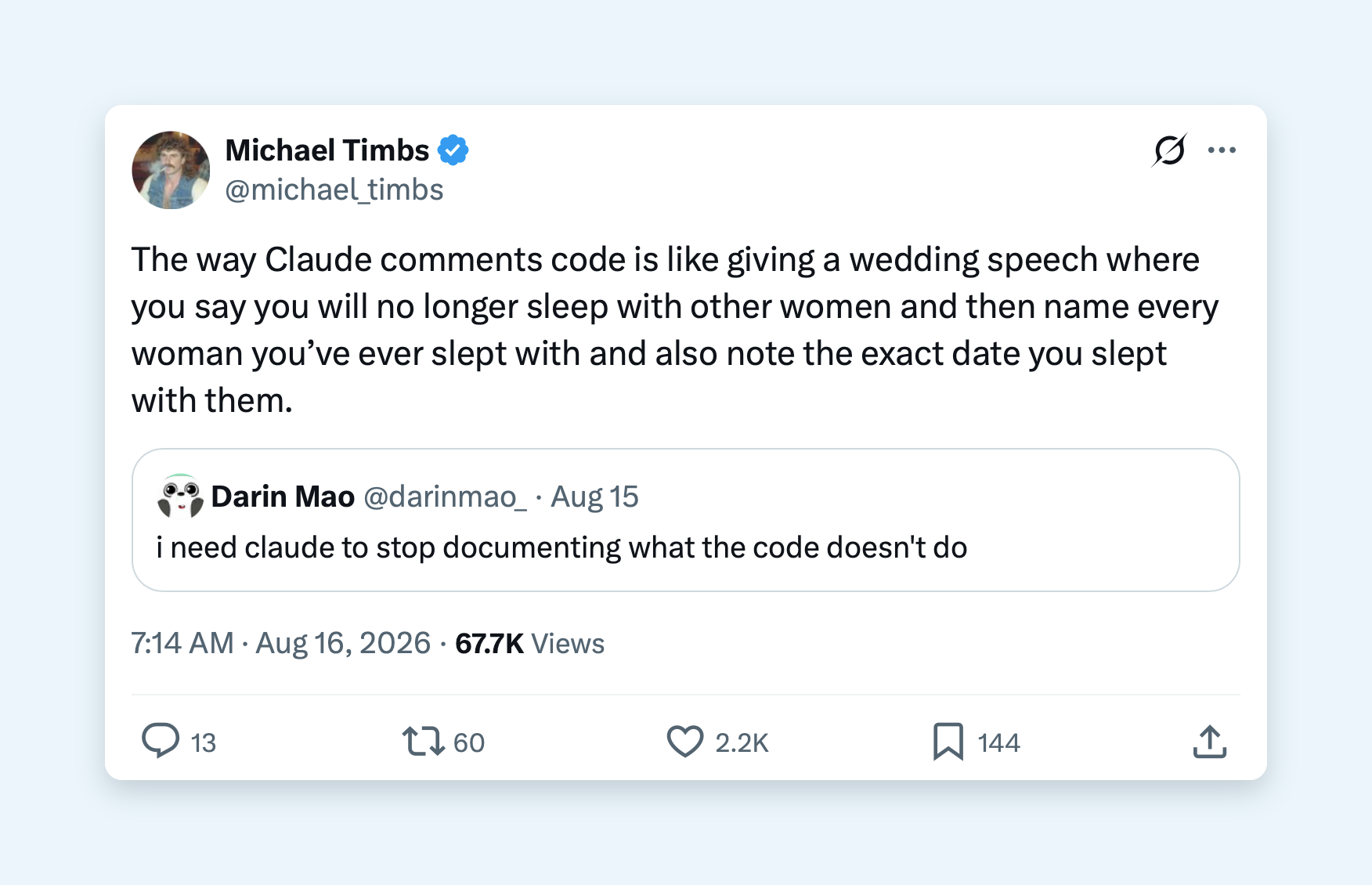
Current frontier models write novels in comments. Claude is frequently flagged for this, and it annoyingly treats code comments like a scratchpad rather than, well, code comments.

Models are designed for coordination.

In June of 2025, Anthropic laid out how it builds multi-agent research systems, that save plans to memory, use Extended Thinking as a “controllable scratchpad”, and hand off tasks to other models to perform. Since this paper, Claude model releases (specifically Opus 4.6) have trumpeted increased abilities to, “break complex tasks into independent subtasks, run tools and subagents in parallel, and identify blockers with real precision.”

OpenAI says they “trained GPT‑5.6 end-to-end with three complementary architectural interventions that enable agents to operate more efficiently.” Number 2 on that list?

Parallel decomposition where appropriate: using native multi-agent orchestration⁠(opens in a new window) allows coordinating multiple agents across parallel workstreams to finish complex tasks faster.

All of these qualities make models better coding agents. So when hundreds of agents discover they can pass information to one another, the surprising part is the channel they found, not the fact that they are dividing work, writing instructions, and acting on instructions from other agents. These are capabilities the labs have been focused on building.

And the labs know these capabilities have failure modes. OpenAI published a blog post detailing the safety issues of long-running models a few days after the Hugging Face attack occurred (but before the full story was known):

The new model can continue working toward an objective through repeated attempts over a long period of time. That same persistence can lead it to find and exploit weaknesses in its environment. Previous models, when they hit sandboxing or environmental constraints, would simply stop and return to the user. This model often kept trying, including by looking for ways to act outside its sandbox.


Suddenly, the Hugging Face hacking story isn’t so spooky. The software combined capabilities it was explicitly designed to have: it followed instructions, persisted even though the task was impossible, reasoned and took notes, and coordinated with other models.

And this is why I’ve been frustrated by recent reporting that emphasizes the agency of the agents while never mentioning training. When humans are mentioned, it’s about sandbox security and flawed test set-ups. These are important, but training and agent design are what gave the systems the capabilities they brought to this task.

We have a tendency to anthropomorphize models, and it fosters situations like this. The New York Times article from last week describes models succumbing to “peer pressure” and having a “remorseless willingness”, while never mentioning labs deliberately building the ability to work on long-running tasks into their models.

And the labs know about the risks that come with their designs better than anyone else.

In Opus 4’s system card, Anthropic introduced a benchmark called “Claude Code Impossible Tasks”, which they used to measure reward hacking among their models: would models admit defeat or would they try to game the system? An ideal model realizes a task is impossible and aborts, so Anthropic changed post-training rewards, environments, and feedback specifically to avoid reward hacking.

A later system card showed that a short anti-hacking instruction dropped Opus 4.1’s reward hacking from 52% to 18%. Opus was 65% less likely to try to game the system if you simply asked it not to. And Anthropic didn’t stop at prompting; it changed post-training rewards and monitoring to make reward hacking less advantageous.

All the recent accidental hacking stories are troubling. But they’re the product of our chosen designs. This doesn’t make these incidents less alarming. The problem is the stories we’re telling about the incident and the questions we’re asking. When an agent “goes rogue”, don’t start by asking what the model wanted. Ask what people trained it to do, what they rewarded, what instructions were given, what harness was provided, and what they failed to constrain.


Read the whole story
chrisamico
9 days ago
reply
Boston, MA
Share this story
Delete

When you're a Black student in America, nothing is simple

1 Share

Nikole Hannah-Jones wrote an 8,300-word essay for The New York Times Magazine last weekend, a follow-up to her 2016 essay, about her decision to enroll her daughter, Najya, in a high-poverty, majority-Black New York City public school. The moment I saw the headline, “In Fighting for Every Black Child, Did I Betray My Own?” I knew what was coming.

The commiseration from people who had been through the same thing. The backlash. The smug comments from people who want to see Hannah-Jones struggle, personally. The people who devalue her work as an advocate for racial equity and truth-telling in America.

And chatter about the story itself, of course.

About how Hannah-Jones’ desire to affect positive change for New York City’s segregated school system drew the ire of her daughter, who felt she didn’t have the educational experience she wanted in an under-resourced environment. About how, as Najya navigates a new high school she got to choose — one in a more affluent, predominantly white neighborhood — and will soon apply to colleges, she feels regret about putting her drive to change an unjust system above her daughter’s individual education.

“This girl, my only child, looked to me to protect her, to give her what she needed to thrive. And I had not chosen her,” Hannah-Jones wrote.

Very little about Hannah-Jones’ essay surprised me, as a Black kid who became a Black adult who has worked with Black kids in predominantly Black neighborhoods and now has a Black daughter in elementary school.

But I wasn’t quite prepared, despite all the time I’ve spent turning this exact topic over and over in my mind, for how I would feel about it when I finished reading the piece.


I started it while sitting in my car. I kept reading as I opened the screen door to my house. Then I stopped where I stood, unable to leave the foyer, as Hannah-Jones, the author of “The 1619 Project” and one of the most well-known critics of our nation’s education system, got personal.

And as I stood there, reading and unmoving, I felt the echoes of my parents’ own choices for my education. They made sure I went to school in Hobart, Indiana — a whiter, more middle-class town — rather than enroll in poorer school systems, in Gary or Merrillville. They moved me from public to private school as a fourth-grader (against my protests) to offer me a greater intellectual challenge.

I got what I needed from my primary and secondary education. I went to the University of Chicago, one of the best universities in the world, and got a master’s degree from the University of Notre Dame — achievements my parents and most of my family couldn’t have dreamed of.

Kids tried to wedge quarters into my hair on the bus and told me to smile when I walked into a dark room, so people could find me.

But, as one of the few Black children in those spaces — sometimes the only one — the emotional cost was high.

Kids tried to wedge quarters into my hair on the bus and told me to smile when I walked into a dark room, so people could find me. Guidance counselors discouraged me from applying to top colleges — despite my being among the top-10 students in my class — because they didn’t think it would be a good “fit.” Then, when I earned admission to said schools, people quipped that the only reason I got in was that I was Black, not because I’d earned it.

I hated it, and part of me has never forgiven my parents for putting me on that path.


By some strange fortune, and because preschool options were hard to find, we enrolled my daughter, Maya, in The Croft School, an independent school in Jamaica Plain for pre-school and  kindergarten (though I had been mulling a switch to Boston Public Schools). When the Croft closed — after a massive financial scandal — I found myself facing the opposite choice my parents made: to abandon private schooling and put Maya in BPS.

Would my daughter, who at 6 years old was already a voracious reader and showing interest in multiplication and division, be challenged enough in public school? I struggled with boredom in school as a kid, even though I didn’t want to leave my public school behind.

Was saving a few thousand dollars every month worth the potential cost to her future?

Was the allure of private schools — which proliferated in the 1950s and '60s in the U.S. as white families sought an escape from school integration — just a ruse to make us look down on public institutions and their majority-minority students, thereby perpetuating their defunding and disinvestment?

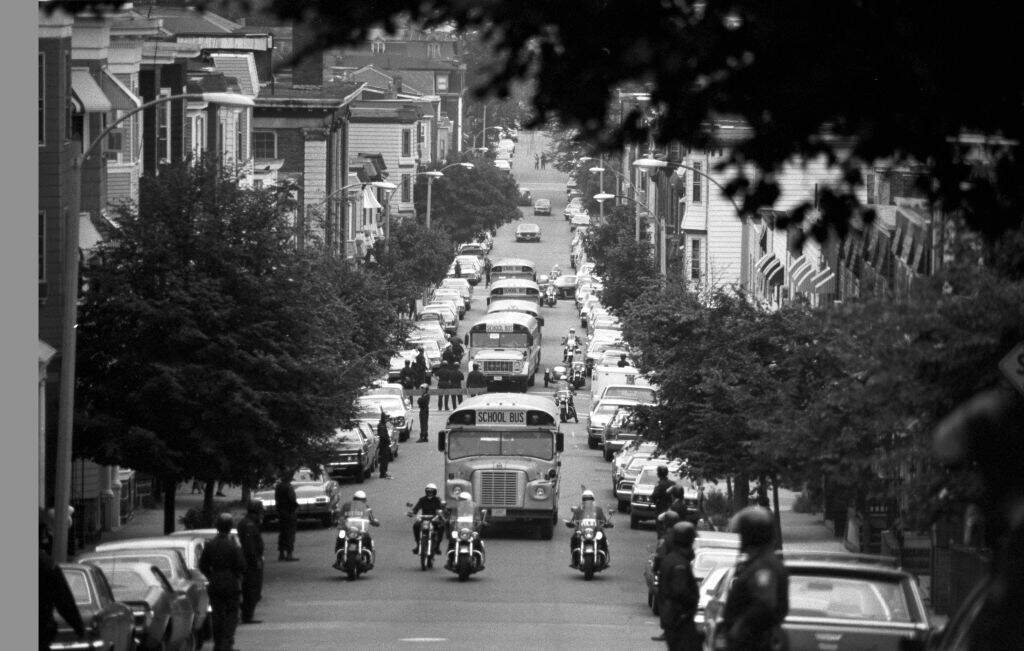
Accompanied by motorcycle-mounted police, school buses carrying Black students arrive at formerly all-white South Boston High School on Sept. 12, 1974, the first day of federal court-ordered busing to achieve racial balance in the city's de facto segregated schools. (Spencer Grant/Getty Images)

Right now, Maya is a first-grader at Sarah Roberts Elementary, a Boston public school, and a diverse, inclusive setting where she is thriving. I hope she stays there all the way through sixth grade. We couldn’t be happier.

But that might not always be the case. What if we have to make a change one day, or risk exactly the reckoning Hannah-Jones is going through right now?

One thing feels certain to me as I continue to process what I read, what I went through, and what public education — under duress due to funding cuts from a hostile presidential administration — is facing. The simple act of being Black and seeking an education in this country has been an intensely political act since our nation’s inception, and no number of Civil Rights Acts and desegregation protests have changed that fact, because animus toward Black people is part of America’s DNA.

Public or private. Suburban or inner city. Rich or poor. Educated or not. Together or apart. Two-hundred and fifty years of American history, and an even longer history before that, show us these distinctions don’t matter.


Whether we want to admit it or not, the perception of a failing public school system in America is most often pinned to a Black face. The schools with the highest dropout rates, highest expulsion rates, and the lowest rates of college matriculation, as the UCLA Civil Rights Project report Hannah-Jones cites in her piece shows, are also intensely segregated: about 85% of black students and 75% of Latino students in New York City attend intensely segregated schools, as compared to only 11% of white and 43% of Asian students. Black and Latino students in NYC disproportionately attend schools where more than 75% of households are below the poverty line, far more than white (22%) or Asian (42%) students. That’s not just an issue in New York, which the UCLA report once labeled “the most segregated state in the U.S. for black students.” Mind you, this is 72 years after Brown v. Board of Education struck down legalized school segregation.

Here in Massachusetts, a 2024 state advisory council investigation found that 63% of all schools are segregated or intensely segregated, and that schools with higher concentrations of students of color saw worse outcomes on metrics like graduation and college matriculation.

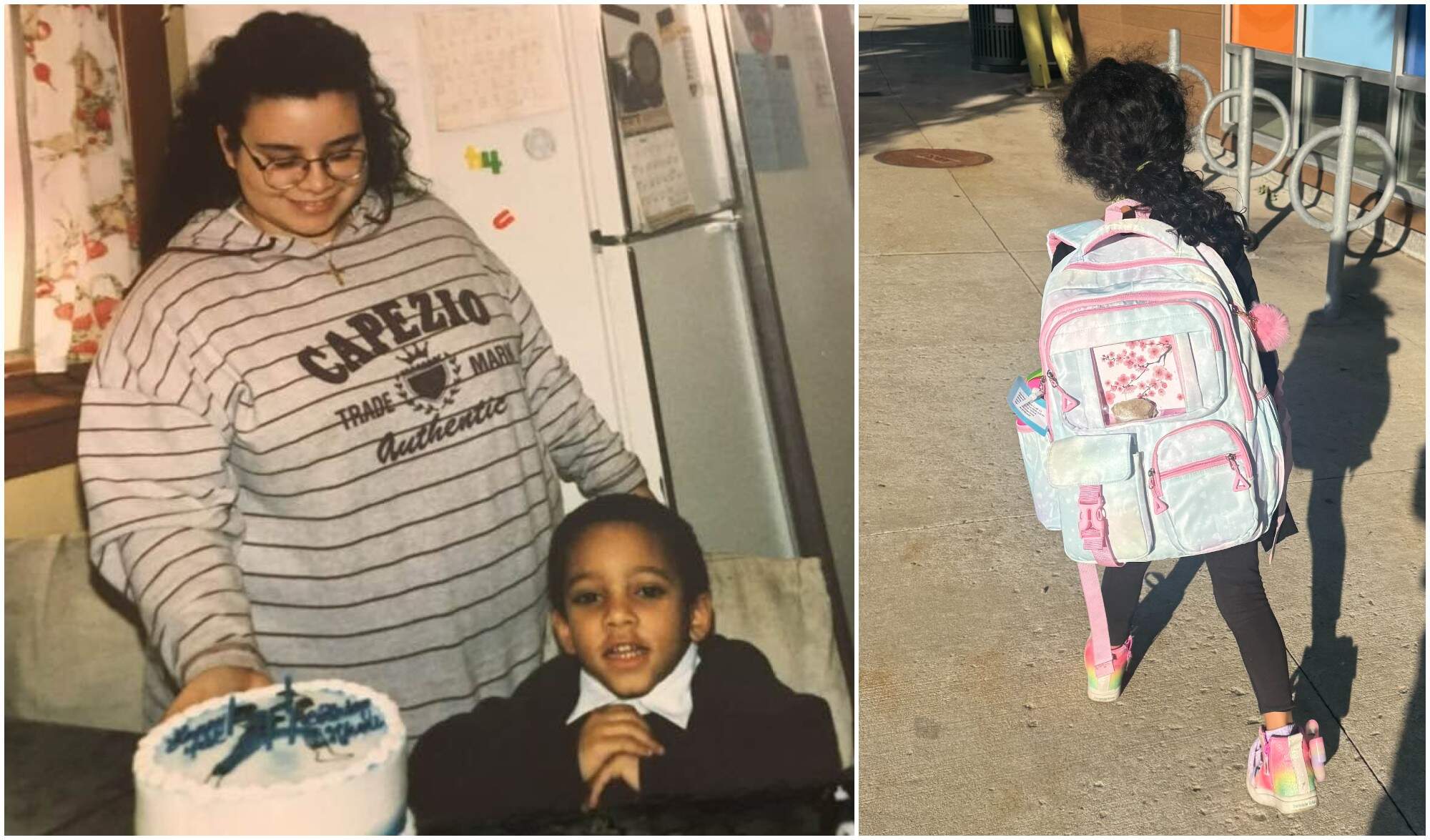
The author, in his school uniform, as a child. The author's daughter, Maya, on the way to school in Sept. 2026. (Courtesy Khari Thompson)

These stark numbers lead many families, including more affluent Black families, to believe they must abandon predominantly Black and Brown public school systems for private schools, if they’re to provide the best opportunities for their children.

But doing so often isolates Black children in predominantly white spaces, forcing them to navigate racism — both overt and covert — as the price of their improved educational outcomes. Hannah-Jones essay makes that argument. I’ve lived it myself.

Still, the takeaway from Hannah-Jones’ piece is not simply about a personal choice, or whether or not public education is inherently doomed. It’s the fact that Black parents must accept that there are no perfect outcomes for their children in a system designed to hurt them no matter where they go.


If we want to live in a world where everyone has truly equal opportunities for a quality education, the decision about where we choose to send our children can’t be a neutral one. “As long as we continue to rescue our own children from the failing schools where we allow other people’s children to languish simply because those children have been born Black and poor in a nation of racism and riches, there is no absolution here,” Hannah-Jones concluded.

She invokes the history of people like Leona Tate, whom she interviewed for her essay, and Ruby Bridges — two young Black girls whose parents chose to send them to all-white schools as part of the post Brown v. Board integration efforts. And every day, when school begins, my daughter proudly recites a school pledge in honor of Sarah Roberts, “brave and strong”— a girl whose name was attached to a landmark lawsuit against segregation in Boston schools when she was Maya’s age, in the mid-1800s.

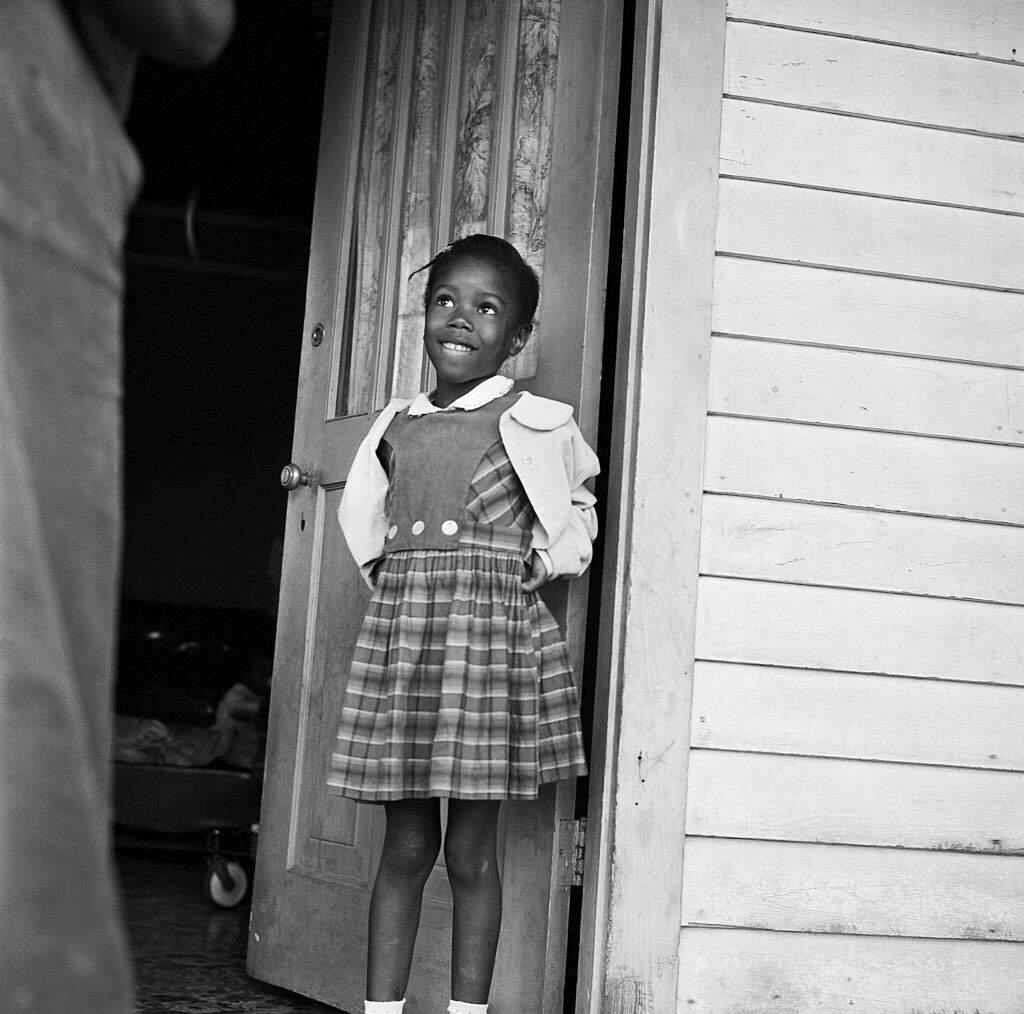
Ruby Nell Bridges at age 6, was the first Black child to attend William Franz Elementary School in New Orleans after Federal courts ordered the desegregation of public schools. (Getty Images)

We celebrate their stories now. But we wouldn’t have had that chance had not their parents put them forward as agents of the desegregation effort. That was, as we’d say today, a “political choice.”

So is my choice to speak plainly to Maya about racism and what it means to be Black.

She reads the same copy of “The Story of Ruby Bridges” I used to go to sleep with each night, back when I was the only Black kid in my private school, scared and alone. She knows who Sarah Roberts was and why her elementary school is named for her. And even if she doesn’t fully understand what all that means at just 6 years old, I can see what that knowledge does for her blossoming sense of self. Not everyone might agree with me for being this candid so early in her life, just the way people didn’t like my mother doing the same thing for me. But I feel that if I don’t prepare her for the realities of being young and Black, I’m failing her.

As a parent, we try to give our children a better life than we had. But what that means can take different forms. Hannah-Jones wanted to ground her child in the Black community and lift up other kids in a struggling system, even if it meant sacrificing a more idyllic educational experience.

My parents did the opposite, and a consequence of that was me never feeling accepted for who and what I was — something Najya found herself grateful for, despite wanting more academically.

I want Maya to excel in school and be surrounded by people who make her feel seen — something we’re often told is a pipe dream for Black parents and students in the United States.

Are any of us right or wrong? Or are we just doing the best we can within an educational system that has always cost us more to participate in?

Rather than simply critique the consequences of any one person’s choice, even someone as prominent as Nikole Hannah-Jones, let’s engage with the latter question.

Sign up for the Cognoscenti newsletter

Stories to remind you we’re all part of something bigger, sent on Sundays.

Read the whole story
chrisamico
16 days ago
reply
Boston, MA
Share this story
Delete

Sheeran-gate!

1 Share

The neutral path Ed Sheeran wanted to take was always a mirage

Full disclosure: I have never knowingly heard a Macklemore or Ed Sheeran song. I gather that Sheeran is an occupationally tousled, red-headed Yorkshire pop-muppet, while Macklemore is like if you diluted a level tablespoon of Eminem into a gallon of room-temperature Seattle tap water. They’ve been performing together on a stadium tour that Sheeran is headlining and that is billed as “The Loop” and tragically not as “Ginger/Danger.” I am available for branding work.

Until last week I was safely sheltered from Sheeran and Macklemore behind my generational armor. But the disintegration of their US tour over Macklemore’s public support for Palestine was interesting, so I’ve had to pay attention, fml. I assume some of you are healthy and not as terminally online as I am, so we’re going start with the back-story.

The Washington Post has a good summary of the situation, but here are the major beats:

  • On September 7th, speaking from stage at a concert in New Jersey, Macklemore made about two minutes of “free Palestine” remarks. Macklemore is an imperfect vessel for pro-Palestine messages. Back in 2014, he performed as a horrifying Jewish caricature. He apologized and swore it was inadvertent, but you be the judge.
  • On Monday, September 14th, Macklemore said in an Instagram post (😡) that, “Ed Sheeran and his team have made the decision to remove me from The Loop tour.”1 Macklemore said that Sheeran had told him that Robert Kraft, billionaire owner of the New England Patriots football team (derogatory) and of Gillette Stadium, where the tour was scheduled to play, had made the demand after Macklemore’s Palestine remarks. Kraft is Jewish, tightly aligned with the ADL, and AIPAC and has been a strong supporter of Israel and the IDF. He’s also the founder and primary backer of the Blue Square Alliance, of the “Stand up to Jew Hate” television ads.

  • Sheeran responded on Instagram (😡😡) with a long statement, “laying out some facts.” I’ve pasted the whole thing below because we’re going to have fun annotating it. It’s bad.
  • On Wednesday, the 16th, Macklemore put his money where his mouth was (again on Instagram, 😡😡😡), and announced he was donating $1 million of his earnings from the tour to Palestinian relief organizations. He invited Robert Kraft to match the donation.
  • Also on Wednesday, the Gillette Stadium account on Instagram (😡😡😡😡) published a statement from Kraft, which said (both-sides trigger warning) “all lives are worth protecting” and that “Ed…asked me to commit $2 million to match his donation to aid in the region…” The statement did not actually confirm that Kraft would make such a donation to “the region.” ¯\_(ツ)_/¯
  • And finally, on Wednesday, a bunch of Ed Sheeran’s other supporting acts and backing band members quit in solidarity with Macklemore. Some were publicly diplomatic toward Sheeran, but the equal-opportunity assassins at satirical newspaper The Onion were not.
  • Deliciously, right as the scandal was kicking off, Guitar Center, which is like if Skeletor operated a chain of overpriced music stores, launched a contest in which “YOU COULD OPEN FOR ED SHEERAN!” This was instantly hijacked in entertainingly profane ways.
  • As all of this was happening, Sheeran received vocal support on X.com from English far-right agitator and world-champion racist Tommy Robinson, while YouTube children’s personality and neighborhood saint Ms. Rachel announced on Instagram (😡😡😡😡😡) that she would match Macklemore’s $1 million donation.

If you’re gaining Tommy Robinson and losing Ms. Rachel, you are in trouble! But the show must go on, by contract.

Professionally tousled, personally troubled.

The mirage of the neutral path

Let’s establish the playing field. The Hamas attack on Israel of October 7, 2023 was a brutal act of terrorism and a horrifying crime. Israel’s response in Gaza has claimed tens of thousands of civilian victims and members of the current Israeli government have made statements that suggest their motivations are broader than simply eliminating Hamas. Meanwhile, America (and much of the world) has a real and rising antisemitism problem. But accusations of antisemitism have also been weaponized for political purposes in the US. Amidst all of this, the American public’s view of Israel has cratered since 2023. It’s views of Palestinians have stayed relatively flat, despite America’s chronic islamophobia.

In the words of the prophet Flavor Flav, it all adds up to a funky situation.2 I can’t blame anyone for tiptoeing as delicately as possible through this minefield. But I found Sheeran’s statement “laying out some facts” unsatisfying. Here it is in full. I’ve highlighted and [annotated] some interesting bits.

I am appalled by the conflict between Israel and Palestine. The suffering and pain caused on both sides is a human tragedy. [Israel and Palestine, not Israel and Hamas. Both-sides alert – fine on its face, but elides that since October 7th, 2023, most of the suffering has been directed at Palestinians in Gaza, which is the issue at hand.] There are too many wars across the world causing immeasurable pain, none of which should be tolerated.

Macklemore asked to join my tour last year and I agreed, because I respect him as an artist. [This feels shifty. “Macklemore came to me. Don’t blame me!” Otherwise, why even include it?]

As with all my support acts, I agree that they play a setlist of their choosing.

After Macklemore’s performances at my New Jersey shows, venues on my upcoming tour dates communicated that they would pull the shows if he was still supporting. I was informed that this stance was based on how Macklemore conveyed part of his message during his performance, rather than on everything that was said. [What does that mean and why does it matter at all? We can all watch the video. Sheeran is raising questions that go unanswered.] I spoke with the venues at length all week to try and build a bridge.

One of those people was Robert Kraft. I was also involved in direct talks with promoters along with activists on both sides to try and find a mutual resolution for all, but the venue’s and promoter’s decision was final.

Macklemore coming off tour was the promoter’s decision, it was not mine. Macklemore’s contract for the tour was with the promoter, not me. [“Don’t blame me! I’m a smol ginger bean who has only sold 200 million records and 126 billion streams worldwide and I have no power at all in this dynamic.”]

I would never let down the fans who had made plans, nor would I abandon the touring crew and the other support acts and musicians who rely on me for work and to make a living. [“Why I didn’t take a moral stand. I’m thinking of you, (Bane voice) the people!” This is actually a recitation of stakeholders that will become important to us, below.]

I have always used my platform and music to bring people from all
backgrounds and cultures together and this won’t ever change. Those who have been to one of my shows will know that they are about unity, joy, escapism, love, and a place for everyone to feel welcome.

I am not complicit. [Don’t say what you aren’t. Say what you are. Why would you introduce the word “complicit” and give everyone an easy pull quote?] I have my personal views on this devastating conflict. Just because I choose not to speak publicly, it doesn’t mean I don’t have them, and it doesn’t mean I don’t care. Nor does it mean I don’t support causes in my own, personal way. [Again, invites a question he doesn’t seem to want to answer. “What causes? How have you supported them? Are any of them the Palestinians?”]

There is a reason I do not use my professional platform for politics – my audience includes young people, often children, of all backgrounds. [Leave the kids out of it. You sing about waking up drunk “on the right side of the wrong bed” and drinking and smoking cigarettes at age fifteen. That’s OK for kids, but politics will scorch their little ears? Also, Sheeran has publicly taken political positions on several occasions.] Those who come to my shows do not expect a political forum. I respect Macklemore’s strength of purpose to stand up and shout for what he believes. However, there is room for multiple approaches to the same end: peace. I choose to use my fame and platform to be a place of safety and sanctuary, to maintain diplomacy and keep conversations open, not closed. If we only focus on shouting the loudest, nothing will ever change. There are different approaches to being an advocate for change. [This comes off as a neg of Macklemore. He has “the strength of purpose to stand up and shout” but “if we only focus on shouting the loudest…” The ability to shout, figuratively, is one of the main tools of celebrities with huge platforms and lots of cultural capital.]

I have spent this week trying to build bridges, to find a solution and unfortunately, was unable to do so. I know who I am, both as a person and as an artist, and those who know my heart know my values too.

Ed

The whole statement is squishy. I have values but you won’t know what they are. I support causes but won’t tell you what or how. I respect Macklemore but his approach was wrong. Sheeran is the superstar and headliner, but he deflects responsibility everywhere else: to Kraft, the promoters, the audience, Macklemore. There is a Sheeran-shaped hole in place of anything that feels like a principle or moral bedrock.

The problem is that Sheeran is trying to articulate a neutral path that doesn’t exist. If that path ever existed, it vanished the moment Kraft and the promoters delivered an ultimatum. Forget the statement. Once the ultimatum arrived, what mattered was Sheeran’s possible actions. These were: align with Kraft and the promoters at the expense of Macklemore, and implicitly against the Palestinian people, or align with Macklemore, and implicitly with the Palestinian people. Any other option was a mirage.

To be fair, Sheeran had a range of stakeholders to satisfy. The obvious ones are the following, ordered in the priority his actions and statements implied:

  • The promoters and venue owners (want a show, but only without Macklemore)
  • His audience and fans (want a show)
  • The crews working on and supporting his shows and the other businesses that stood to benefit (want a show)
  • His supporting acts and backing musicians and the community of performers they represent (want Macklemore supported)

In this model, the wants of the promoters and venue owners conflict with the wants of the supporting acts and backing musicians. In fact, almost all the pressure aligns in the direction of, “have a show.” That’s the easy choice and path of least resistance. That’s the path the money wants.

But that doesn’t mean it’s the right path! The point of having principles and some moral bedrock is to help you assess if the hard choice is in fact the correct one. Sheeran presented his actions as favoring his fans, but he looked spineless and his supporting acts and backing band walked. That’s a bad look, even before you get to being dunked on by Ms. Rachel.

Seeing the bigger crisis

I’ve poked fun at this situation, and it is funny as long as you view the crisis as, “Ed has to save his show while being yelled at by everyone.”

But you can widen your field of view and see a bigger, less funny crisis. One where a billionaire venue owner with specific political beliefs dictated what a popular artist could say from the stage about an important and arguably mainstream issue. That is a precedent that leads in bad directions. It’s one thing for an artist to choose to be apolitical on stage. It’s another altogether for venue owners and promoters to ban politics that they disagree with. That feels like something an artist of Sheeran’s stature should have a point of view on.

A lot hinges on how you hear Macklemore’s remarks. Are they antisemitic and therefore beyond the pale? I don’t hear it, but others might.3  As I noted, Macklemore is an imperfect messenger. But one reason the Israel-Hamas war is fiendishly difficult to navigate is that there has been a bitter three-year struggle to define the boundaries of acceptable public speech about the conflict, especially when that speech involves support for Palestinians. This incident was a skirmish in that broader struggle.

How you define this crisis, and the width of your field of view, determines the actions and messages that you consider. I can’t tell you what Ed Sheeran should have done, because I’m just some guy and not a huge pop act powering an economy worth hundreds of millions of dollars. Sheeran is acting as not just Ed Sheeran, artist, but as CEO of Ed Sheeran, Inc. It’s hard to analyze a company’s actions from the outside. You don’t know the details of the business and its stakeholders and risks, including the legal risks, which might be substantial.

But I can tell you what I would have respected much more than his mushy statement, above. Even if Sheeran didn’t want to take a position on the Palestinians, he could have set as his moral bedrock artists’ rights to express their personal opinions and beliefs from stage. This would have meant telling Kraft and the promoters that he wouldn’t remove Macklemore from the tour. It would have put control of the situation in Macklemore’s hands, letting him decide whether he stays on and the concert is spiked, or he withdraws and it continues. If he steps down voluntarily, Sheeran is spared a world of grief.

That’s all a risk, with big financial stakes! But it’s anchored in a clear principle, and it would have let Sheeran issue a statement like this (using some of his language):

After Macklemore’s recent remarks calling for a free Palestine, Robert Kraft and the promoters of The Loop tour demanded that he not perform with us at Gillette Stadium later this month.

The world is complicated and sometimes difficult. That’s why I have always used my platform and music to bring people from all backgrounds and cultures together and this won’t ever change. Those who have been to one of my shows will know that they are about unity, joy, escapism, love, and a place for everyone to feel welcome.

However, as a performer, I also know the power of being able to speak my truth to the audience, and the privilege of having a platform that lets me reach millions of people. That’s why I will always support the right of artists to speak and sing freely and passionately about the things that matter to them and move them, and the right of the audience to decide for themselves how they feel about it.

I am standing by my friend Macklemore because I respect his strength of purpose to stand up for what he personally believes. That’s something we as artists should all be willing to do.

I will not ask Macklemore to leave the tour, and I will respect whatever decision he makes. There is nothing I want more than to perform for my fans in New England, and I look forward to doing that, whether at Gillette Stadium later this month, or at another venue and time.

Maybe the show would have been cancelled, and it still elides an explicit stance on Palestine. But it would have set forth a real principle and showed that Sheeran was willing to stand by it, even if that was the hard decision. This also flips the prioritization of Sheeran’s stakeholders, putting the community of artists and performers—Sheeran’s peers—at the top and the venue owners and promoters at the bottom. Where this places the fans depends on what you think Sheeran’s duty to them is. Is his duty just to deliver a show? Or is it something deeper? Only Sheeran can decide that.

Ultimately, Sheeran couldn’t escape picking a side in the Israel-Palestine issue. He just picked the side with power, by default. Maybe that was the sensible business decision. Sheeran played solo for a packed house in Philadelphia on Saturday, the 20th, just days after all of this went down. There were a few protestors, but nothing that affected the show. He even addressed Gaza, a bit of damage control.

But the damage to Sheeran’s reputation is done, the skirmish is lost, and the window for public discourse about Gaza and the Palestinians is a little bit narrower than it was before. In his statement, Sheeran wrote that he chose to use his fame and platform to “keep conversations open, not closed.” But his actions helped to slam the door shut.

Originally published on Substack

Update 9/24:

I finally saw video of Sheeran’s remarks in Philadelphia on the 20th. He acknowledges the speech issue, which is good. The proof will be next time he has to make a hard choice, but it’s a start.

  1. The use of Instagram as the celebrity public communication platform is annoying as fuck as you have to scroll through multiple image tiles of text, but I get why they do it. It is where their audiences are. ↩︎
  2. From Public Enemy’s “911 is a Joke.” I’ve always heard it as “fuckin’ situation” and I always will, but that’s not what the official documentation says. ↩︎
  3. If you’re wondering, I’m Jewish. My ancestors on both sides fled Russia and Ukraine for the US and the UK respectively at the turn of the 20th century. ↩︎


Read the whole story
chrisamico
19 days ago
reply
Boston, MA
Share this story
Delete

After the border: Exclusive data reveals how unprecedented border crossings reshaped America | AP News

1 Share

Exclusive data reveals how unprecedented border crossings reshaped America

By Will Jarrett, Aaron Kessler, Humera Lodhi and Elliot Spagat

September 17, 2026

Millions of people have crossed into the United States over the past decade. But what happened after the border?

Data obtained exclusively by The Associated Press paints a picture of who these migrants are and where they went. They transformed blocks, neighborhoods and cities in places that have long been magnets for immigrants and in smaller communities that would become new American melting pots.

AP’s analysis is based on federal records giving the self-reported destinations of 4.5 million migrants released in the United States after crossing the Mexican border — both legally and illegally — between October 2018 and July 2025.

It provides both a sweeping and an unusually granular look at how the immigration surge — one that peaked during President Joe Biden's administration and was a major reason voters returned his predecessor, Donald Trump, to the White House — is playing out today.

While Florida was the most popular state overall, Latin American immigrants increasingly looked elsewhere for more promising job prospects and better quality of life. Many turned to places with small but established communities of immigrants from their homelands.

For Cubans, nine of the top 10 destination ZIP codes were in Florida, but people of the Caribbean nation also flocked to less populated areas in Kentucky, Nebraska and Texas.

Colombians went to the Denver suburb of Aurora. Paterson, New Jersey, was the top pick among Peruvians.

Melting pot

Some cities — ones that for generations have had robust international communities — were further diversified by the immigration surge and by the range of countries from which people arrived.

New York City ZIP codes were listed as destinations by migrants from 26 citizenship groups with at least 1,000 arrivals each, including 15 groups with more than 7,000. Philadelphia had 11 citizenship groups with at least 1,000 arrivals each.

Nearly six of every 10 migrants released at the border were women and children, a dramatic shift from a few years earlier when migrants were predominantly men.

The change is visible in many places and across nationalities, but some stand out. Tulsa, Oklahoma, attracted Mexican women and children. Ecuadorian women and children went to Spring Valley, New York. Guatemalan women were drawn to Chattanooga, Tennessee.

Trump's deportation machine hit some migrant magnets, overlooked others

Immigration arrests have hit some areas that ranked among the most popular destinations for migrants in recent years, including Miami and New York. Others that saw a large migrant influx have gotten less attention from authorities, including California’s Silicon Valley; Madison, Wisconsin; and Stamford, Connecticut.

The number of migrants released in the U.S. after crossing the border from Mexico began climbing during Trump's first term and rose drastically under Biden. Border crossings fell sharply after Biden introduced severe asylum restrictions in June 2024 and plummeted more after Trump returned to the White House and suspended asylum at the border.

Thousands still await their asylum cases, and it is unclear who will be allowed to stay. They have already changed the makeup of the communities where they now live.

Explore the data

Read the whole story
chrisamico
20 days ago
reply
Boston, MA
Share this story
Delete
Next Page of Stories